
How to Say You Have Something: The Concept of Possession
In this lesson, we are going to talk about possession in the Russian language, a topic that is essential for understanding Russian. The point is that we don’t use the phrase ‘I have’ (you have, he has, etc.) to express possession. The actual possessive construction might be very confusing for English speakers, and not only for them, but also for speakers of other languages that use the structure ‘I have’ when talking about possession.
That’s one of the reasons why some people might find the Russian language challenging. However, it’s not as difficult as you might think. Just relax, breathe, and be patient.
By the way, here’s a video for you if you want to make the learning process a bit easier.
First of all, forget about phrases like “я имею”, “он имеет”, “мы имели” etc. THEY SOUND WEIRD! And we never use the verb иметь when talking about possession.
Well, sometimes we do, but very rarely. Mostly in formal situation.
Usually when we want to say that we have something, we start with “У меня есть…”
У is a preposition, which can be translated as “at” or “by” to English. Меня is the personal pronoun я in the genitive case. And есть is… surprisingly, a verb “to be” in the present tense!
What a horror! How is it possible? How can I remember that? If you ask these questions, I can understand your resentment. Just hold on. You don’t need to understand this construction, just remember it, as we, Russians, do. It’s not that hard. But these three words (or even two) will help you express almost any kind of possession.
See Also: Possessive Pronouns in Russian
Have in the present
It doesn’t mean that there is no equivalent verb for “to have” in our language. We have such verb – иметь. So, “I have” will be “я имею” in Russian. But this sounds terribly unnatural in Russian. Never say it! Say у меня есть instead.
Depending on who has something, you should use different pronouns:
у меня есть – I have
у тебя есть – you have
у неё есть – she has
у него есть – he has
у нас есть – we have
у вас есть – you have (plural)
у них есть – they have
Only the second word is changing. It makes things a little easier.
When the owner is someone who should be referred to as a noun, it becomes a little more difficult. We have to decline this word correctly. Here are some examples:
- у друга
- у сестры
- у моей матери
- у моего кота
- у наших соседей
- etc.
So, we always use this structure:
у + personal pronoun/noun in the genitive case + есть + a noun in the nominative case
The last noun doesn’t change, it’s always nominative.

You don’t always have to use the whole construction. Sometimes it’s enough to say у меня (у тебя and so on). For example:
У меня есть сестра. – I have a sister.
У меня две сестры. – I have two sisters.
In the second example, we got rid of the verb and it’s still correct. However, you can’t say “у меня сестра” – this phrase is incorrect. We usually omit “есть” when we talk about having more than one of something. Here’s another example:
У меня есть машина. Точнее, у меня две машины. (I have a car. I have two cars, to be precise.)
But there is not always true. In the next sentence there is no “есть” in both cases.
У них две собаки, а у меня одна. – They have two dogs, and I have one.
Have in the past
In the past tense, we use a similar construction, but the verb changes to the past form.:
у + personal pronoun/noun in the genitive case + был/было/была/были + a noun in the nominative case
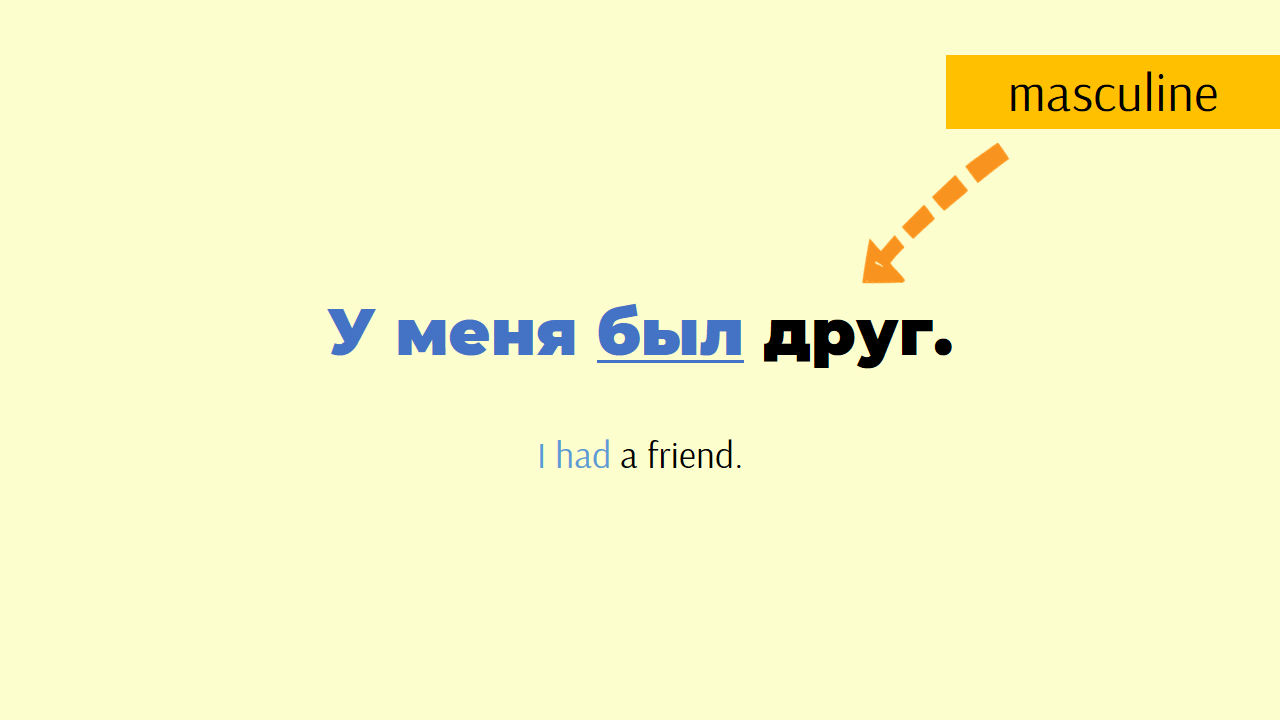
Examples:
У меня был интересный разговор с моим другом. – I had an interesting conversation with my friend.)
У меня была прекрасная возможность поучиться у талантливого преподавателя. – I had a wonderful opportunity to learn from a talented teacher. (“возможность” is female)
У тебя был трудный период в жизни, но ты справился с ним. – You had a difficult period in my life, but you managed to overcome it.
У него была отличная работа, но он решил начать свой собственный бизнес. – He had a great job, but he decided to start my own business. (“работа” is female)
Я знаю, у нас были разногласия. – I know we’ve had our differences. (“были” is plural)
В детстве у меня было много комплексов. – When I was young, I had many complexes.
Было is usually followed by neuter nouns. But we also use it with numbers and words like много (many), мало (few), несколько (several), etc.
Have in the future
Well, guess what changes this time? Right, it’s the verb form. When talking about future, we use this construction instead:
у + personal pronoun/noun in the genitive case + будет/будут + a noun in the nominative case
Examples:
Завтра у меня будет хороший день. – Tomorrow, I will have a nice day.
Теперь у него будет достаточно времени подумать над своим поступком. – Now he will have a long time to think about what he did.
К концу года у нас будет миллион подписчиков. – By the end of this year, we’ll have one million subscribers.
Она купит это платье, когда у неё будут деньги. – She will buy this dress when she has money. (“деньги” is plural)
Надеемся, что дела у них будут идти хорошо. – I hope things go well for them. (“дела” is plural)
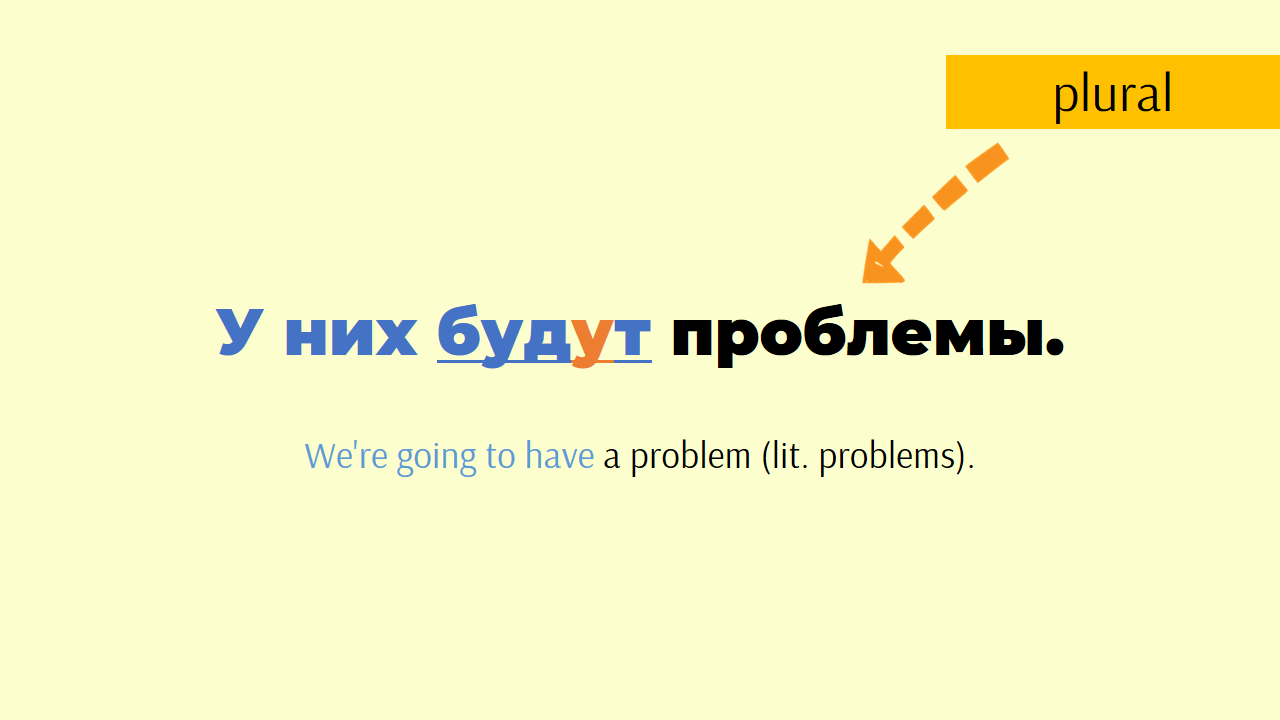
Sometimes “будет/будут” can be omitted:
У меня завтра три ужасно сложных экзамена. – I’ve got three terribly difficult exams tomorrow.
Other cases when we use “у меня”
Almost every phrase with the verb “to have” in English we translate using “у меня (тебя, его, нас и т. д.)”. Not only for talking about possession.
Examples:
- У меня болит голова. – I have a headache.
- У меня болит горло. – I have a sore throat.
- У меня выходной. – I have a day off.
- У нас с тобой одинаковые интересы. – You and I have the same interests.
- У него всегда есть простые и понятные объяснения. – He always has simple explanations.
It can be quite challenging for foreigners to understand when to use the word “есть” and when to omit it. However, there are some rules to follow. For instance, when describing appearance or talking about personality, we don’t use the word “есть”.
У него карие глаза. – He has blue eyes.
У неё длинные ноги. – She has long legs.
У тебя приятный голос. – You have a nice voice.
У меня сложный характер. – I have a complex personality.
У моей собаки короткая шерсть. – My dog has short hair.
У твоей сестры крупное телосложение. – Your sister has a large build.
У неё тонкая талия. – She has a thin waist.
Russians use the construction “у меня” all the time in many different cases. It can make your speech sound really natural. For example, we don’t say “в моём доме”, “в моей машине”, “на моём столе”, “в моём шкафу”, we say “у меня дома”, “у меня в машине”, “у меня на столе”, “у меня в шкафу”. Well, actually it is correct to say it both ways but phrases with “у меня” sound a way more natural for Russian speakers. So, you can also find the expression “у меня (тебя, нас, etc.)” in impersonal sentences.
There is a piano in my house. – “У меня дома есть пианино” or “В моём доме есть пианино” (the second one sounds less natural and we rarely say it this way).
In informal speech using the genitive construction is very common. More popular than possessive pronouns. We don’t usually say “мой друг”, “мои родственники”, “моя собака”, “мой муж”, etc. We say: “у меня друг“, “у меня родственники“, “у меня собака“, “у меня муж” and so on.
Examples for you:
Мои дети ещё не ходят в школу. = У меня дети ещё не ходят в школу [spoken, informal] – My kids aren’t in school yet (they don’t attend school because are too young).
Моя подруга пользуется этим средством. = У меня подруга пользуется этим средством. [spoken, informal] – I have a friend who uses this product.
Наш дедушка был лётчиком. – У нас дедушка был лётчиком [spoken, informal]. – Our grandfather was a pilot.
Его начальник очень требовательный. [sounds too formal] – У него очень требовательный начальник. [can be used both in informal and formal speech]. – His boss is very demanding.
Её родственники очень наглые. [sounds too formal, isn’t used] – У неё очень наглые родственники. [can be used both in informal and formal speech] – Her relatives are very brazen.
Often the genitive structure is used to mean “I have someone who is doing/did/will do something”.
- У меня мама так делала. – My mom used to do that. (focus on what she did)
- У нас собака любила этот корм. – Our dog loved this food. (focus on food it loved)
- У меня друг очень хочет посмотреть этот фильм. – I have a friend who really wants to see this movie.
Have No/Don’t Have
I can continue discussing other uses of this structure, but the list could be endless. Let’s now explore how to express the absence of possession in Russian. It’s easy – just use “нет” instead of “есть”.
у меня нет – I don’t have
у тебя нет – you don’t have
у неё нет – she doesn’t have
у него нет – he doesn’t have
у нас нет – we don’t have
у вас нет – you don’t have
у них нет – they don’t have
Examples:
У меня нет времени. – I don’t have time.
У неё нет парня. – She doesn’t have a boyfriend.
Notice that the construction “у меня нет” is followed by the noun in the genitive case.

Well, it was a bit challenging to explain, but I did my best. If you have any questions about expressing possession in Russian, feel free to post a comment here. Or test your knowledge on this page.
